
Benchmark Blog
Bathroom Ventilation and Keeping Mold Out of a NH Bath
August 15, 2026 · By Lee Veader Sr., Founder
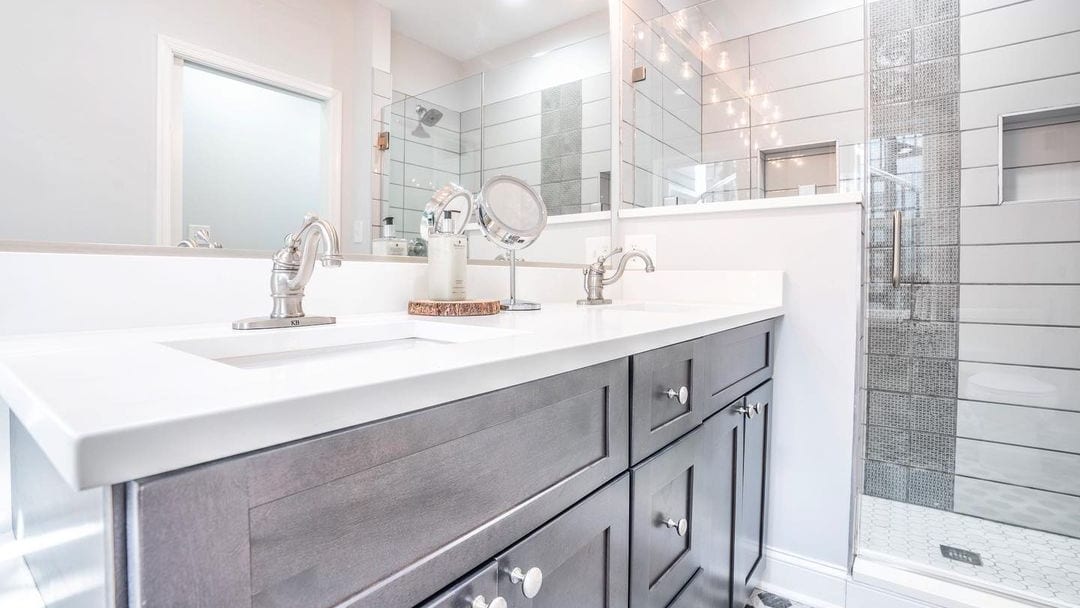
New England bathrooms fight a harder battle than bathrooms almost anywhere else. A hot shower on a cold January morning throws a wall of steam against surfaces that are barely above freezing on the other side, and that mismatch is exactly where mold gets its start. We see it in bathrooms that are otherwise beautiful: a builder-grade fan that was undersized on day one, or a duct that dead-ends in the attic instead of the outdoors. Good ventilation is not the exciting part of a bathroom remodel. It is the part that decides whether the rest of it still looks good in five years.
Why New Hampshire bathrooms have it harder
Humidity does not just disappear when you turn off the water. It has to go somewhere, and in a cold climate it wants to condense on the coldest surface it can find: a window, a mirror, or the inside of a wall cavity where you cannot see it. Add a Seacoast winter, months of low outdoor humidity indoors thanks to heating, followed by a switch to sticky summer air, and a bathroom here works through a wider swing of conditions than one in a milder climate. A fan sized for a mild-weather house often loses that fight in a New Hampshire one.
Older homes make it worse. Many of the Seacoast bathrooms we remodel were built or last updated decades ago, when a small fan vented straight into the attic was considered normal. It was never a good idea, and after enough winters it usually shows up as dark staining on the roof sheathing above the bathroom, discovered only when we open the ceiling.
Signs your ventilation isn’t keeping up
A few things tell us a bathroom has a moisture problem before we even open a wall:
- The mirror stays fogged well after the shower ends, instead of clearing in a couple of minutes.
- Paint or caulk near the ceiling or around the tub is peeling or bubbling.
- A musty smell lingers even after the room looks clean.
- Dark spots show up in grout lines on the ceiling or in shower corners, especially ones that come back after cleaning.
- The fan runs but you cannot really feel or hear it pulling air, which usually means a weak motor, a clogged duct, or both.
Any one of these is worth a look. A few together usually means the fan has been outmatched for a while.
What a good remodel actually changes
Fixing ventilation is not about buying a bigger fan and calling it done, though sizing does matter. A fan that moves 1 CFM per square foot of floor, with most bathrooms landing somewhere between 50 and 110 CFM depending on size and layout, is the starting point. From there, a few details matter more than the number on the box:
- The duct has to run to the outside, through the roof or a sidewall, never dumping into an attic or soffit. This is the single most common mistake we find behind older bathroom ceilings, and it is the one that causes the most damage over time.
- A humidity-sensing switch or a simple timer keeps the fan running past the point most people remember to turn it off, which is usually before the moisture is actually cleared.
- Insulated ducting in an unconditioned attic keeps warm, moist air from condensing inside the duct itself on its way outside.
- Proper waterproofing and tile backing behind the tub and shower give moisture nowhere to hide even on the days the fan is working exactly as it should.
None of this is complicated work for an experienced crew. It is just easy to skip, because it is invisible once the tile goes up, and a shortcut here does not show up as a problem until a few winters later.
What it adds to the project
Here is the honest number. On most bathroom remodels, correctly sizing and venting the fan is part of the base scope, not an upcharge, since the ceiling is already open and the duct run is already being planned. Where it does add real cost is when the vertical run to the roof or exterior wall is long, or when framing gets in the way and we have to build a new path for the duct. In an older home, that is exactly the kind of detail we walk through with you before the work starts, so it is priced into the one fixed number for the finished project rather than showing up as a surprise once the wall is open.
If your home was built before the late 1970s, there are a few other things worth knowing before you remodel, which we cover in our guide to remodeling a bathroom in an older Seacoast home.
The fix is usually straightforward
Mold in a bathroom sounds alarming, and the internet will happily send you down a rabbit hole about it. In practice, most of what we find behind an older Seacoast bathroom wall is a ventilation problem that was never correctly fixed the first time, not a structural emergency. A properly sized fan, ducted the right way, with a switch that runs long enough to finish the job, solves the problem for good in the overwhelming majority of bathrooms we touch.
Lee Sr. has walked into enough attics above old bathroom fans to know exactly what a bad duct run looks like before he even gets up there. If your bathroom fogs up for too long, smells musty no matter how often you clean it, or you just want a second opinion on what is behind the wall, get a custom estimate in about two minutes below, or reach out and tell us what you’re seeing.